Monday, 15 June 2015

Hurray! Gamechanger Djibouti-Ethiopia railway ready, will cut goods travel time from two days to 10 hours

Work in progress on the new railway tracks linking Djibouti with Addis Ababa, May 5, 2015. (Photo/AFP)THE leaders of Djibouti and Ethiopia will oversee the completion of a railway linking their two capitals on Thursday, with the ambition that the link might eventually extend across the continent to West Africa.
Djibouti’s President Ismail Omar Guelleh and Ethiopia’s Prime Minister Hailemariam Desalegn will attend the ceremonial laying of the last track in the 752-kilometre (481-mile) railway, financed and built by China, linking the port capital of Djibouti with landlocked Ethiopia’s capital Addis Ababa.
The first scheduled train is expected to use the desert line in October, reducing transport time between the capitals to less than 10 hours, rather than the two days it currently takes for heavy goods vehicles using a congested mountain road.
“Some 1,500 trucks use the road every day between Djibouti and Ethiopia. In five years, this figure will rise to 8,000,” said Abubaker Hadi, chairman of Djibouti’s Port Authority. “This is not possible, this is why we need the railway.”
With a capacity of 3,500 tonnes—seven times the capacity of the old line at its peak—the new electrified line will mainly be used for transporting goods to Africa’s second-most populous nation.
Ethiopia’s economy is growing fast, with almost 90% of its imports going through Djibouti. Both countries benefit from economic integration, with Ethiopia gaining access to the sea and Djibouti gaining access to Ethiopia’s emerging market of 95 million people.
“Ethiopia is an important country for us,” said Djibouti’s Transport Minister Ahmed Moussa Hassan. “It is the main customer for our logistics facilities and this new railway line will strengthen trade.”
The new line is in fact the resurrection of an old one, built in 1917 by the Franco-Ethiopian Railway Company, but decades later it fell into disrepair and only worked erratically. Trains would regularly derail and it could take as long as five days to make the journey between the two capital cities.
Some abandoned parts of the old line are still visible in Addis Ababa and in central Djibouti.
Djibouti’s ambitions
Another new line linking Djibouti and the northern Ethiopian town of Mekele is also due to be built, but this is not the extent of the project’s ambition.
Hadi says the railway is a step towards a trans-continental line reaching all the way to the Gulf of Guinea, in West Africa.
“We are already the gateway to Ethiopia. We intend to continue this railway line to South Sudan, the Central African Republic (CAR) and Cameroon to connect the Red Sea to the Atlantic Ocean,” said Hadi.
Djibouti, the smallest state in the Horn of Africa, is embarking on large infrastructure projects, building six new ports and two airports in the hope of becoming the commercial hub of East Africa.
Late infrastructure
“Infrastructure is coming very late to Africa. It is impossible for a truck to cross the continent. To transport goods from the east coast to the west coast of Africa, it is necessary to circle the continent by boat,” Hadi said of a sea voyage that can take more than three weeks.
A trans-Africa railway is feasible “in seven or eight years,” he said, as long as conflicts in South Sudan and CAR come to an end.
Liu Xiaoyan, commercial director of the China Civil Engineering Construction Corporation, who is in charge of the Djibouti-Addis line, said his company is ready to continue the work.
“We want to show off Chinese technology to everyone, especially to Africa,” he said, adding that it was also an opportunity to strengthen China’s trade ties with Africa and its presence on the continent. (AFP)
Read more ...

Why Angola, Uganda and Somalia need to be on a 'revolution watch-list

Meeting of the United Democratic Front (UDF) in Johannesburg on 1st January 1985. In the 1980s, the struggle against apartheid became more violent and increasingly desperate. (Photo: Flickr/ UN).FRICA is the world’s youngest continent, and has the potential to realise the economic benefits experienced previously in other regions and countries that have undergone similar demographic shifts.
A surge in youth population leads most nations in one of two directions: Economic boom or social bust. Policy makers have argued for the urgency to create structures to give opportunity to the rapidly growing numbers of young people, without which the region risks social unrest, conflict and instability.
The relationship between large pools of idle, disaffected young men and a rise in conflict is often presented as an obvious, and inevitable risk – but research backs these sentiments.
A study from Population Action International reveals that between 1970 and 2007, 80% of all new civil conflicts occurred in countries with at least 60% of the population younger than age 30.
PAI’s findings are reinforced by empirical analysis by Henrik Urdal at the International Peace Research Institute, who found that even after controlling for level of development, regime type, total population size and past outbreaks of conflict, countries with a large “youth bulge” were 150% more likely than those with more balanced age structures to experience civil conflict in the last half of the 20th century.
The effect is particularly strong for countries with ongoing high fertility rates, as in much of Africa. While the relationship between age structure and instability is not one of simple cause and effect, the pattern is consistent.
Emerging trends
Looking at historical data from the UN Population Division on median ages in various African countries from 1950, a number of trends emerge.
The most significant is that when a country reaches its lowest recorded median age – often between age 15 and 18 – is the time when a war or rebellion is most likely to break out.
In Eastern Africa for example, Rwanda had its youngest median age recorded in 1990, when half the population aged below 15.1. That period coincided with widespread social unrest and an insurgency, culminating in the genocide of 1994.
Burundi’s youngest median age was recorded in 1995, at 15.3. That was in the second year of a civil war that would last 12 years, only formally ending in 2005.
Eritrea’s youngest time was around 1995, two years after the end of a bitter 30-year war of independence from Ethiopia. It should have been a time for rebuilding and forging a way forward for the nascent country, but Eritrea soon plunged again into war, first with Yemen and then with its old adversary, Ethiopia over a border strip.
Due to a higher population density and relatively more developed institutions, West and North Africa has tended to reach this peak earlier than East Africa, but the trend remains the same.
Liberia was youngest in 1985 when half its population was younger than 17.3 years. In that decade, the overthrow and execution of President William Tolbert in 1980 by Sergeant Samuel Doe – aged just 29 – led to spiraling social unrest.
By the late 1980s, arbitrary rule and economic collapse culminated in civil war when Charles Taylor’s National Patriotic Front of Liberia (NPFL) militia overran much of the countryside, entering the capital in 1990. The war ended up lasting 13 years, until Taylor’s stepping down as president in 2003.
The same could be said of Sierra Leone, which was youngest in 1990, with a median age of 17.5. In 1991, former army corporal Foday Sankoh and his Revolutionary United Front (RUF) begun a campaign against President Joseph Saidu Momoh, capturing towns on border with Liberia, sparking off a 10-year civil war.
Sudan was youngest in 1980 with a median age of 16.5 years. In three years, a civil war with the south would break out, and end up lasting 22 years.
Algeria reached its youngest median age in the early 1960s, just at the tail end of a long and brutal war of independence from France. Zimbabwe, too, was youngest in 1980, at 15.5, just as it was winning independence after a long guerilla struggle.
Restive populations - even in France
Even relatively peaceful countries have seen their most unstable and repressive eras coincide with a youth bulge, as governments try to tighten the reigns in the face of a young, restive population.
Kenya was the youngest country not just in Africa, but also in the world, between 1980 and 1985, when 50% of the population was younger than 15. The country faced its first – and only, so far – attempted coup in 1982, and the rest of that decade was characterised by widespread political repression, a contraction of civil liberties, targeting and harassment of dissidents.
Ghana too, was at its most unstable in the 1970s, when coups and counter-coups were the modus operandi of politics in the country – Kofi Busia was ousted as president in 1972 by Colonel Ignatius Acheampong, then in 1978 Acheampong was forced to resign and General Frederick Akuffo took over, and he was in turn deposed in a coup led by Flight Lieutenant Jerry Rawlings in 1979. It also was youngest around that time, with a median age of 16.9 in 1975.
South Africa’s case is slightly different, because the extremely heavy-hand of the apartheid state was able to forcefully put a lid on restive youth, at least for a number of years.
The country was youngest in 1970 when the median age was 18.8, and it was high school students who took to the streets on 16th June 1976 to protest the introduction of Afrikaans as the medium of instruction in school, the start of the Soweto uprising.
It would take nearly another 20 years for the apartheid edifice to come down, but the increasing frustration of those high school students who grew up to be young men and women in the next few years with no hope and no prospects meant that the struggle turned increasingly violent and desperate in the 1980s.
Scholars have even seen a link between youth and revolution in eighteenth-century France, a spike in population boosted demand for food, which in turn drove up inflation, reduced the purchasing power of most citizens, and sparked social unrest.
To some extent, others say the rise of fascism in Europe, and the two World Wars were due to a pool of young people, particularly in the Balkans around 1914.
Others even suggest Japan’s invasion of China in the 1930s can be partially explained by its large number of youth, while others attribute Marxist insurrections in Latin America during the 1970s and 1980s to the swelling population of the region’s unemployed youth (guerilla-related violence quelled as the number of young people declined).
While countries with youthful populations may achieve democracy, they are less likely to sustain it until their age structures become more balanced.
Still, demographers are quick to stress that youth bulges do not solely explain these civil conflicts—corruption, ethno-religious tensions, poverty, and poor political institutions also play contributing roles—but nor do they rule out as coincidence the tendency toward social unrest among states with large youth populations.
Angola and Somalia…are getting younger!
Today, most of Africa is getting slightly older now, having reached their youngest points a few years or decades earlier. But there are a few exceptions, and these are countries that need to be on a “revolution watch-list”.
Angola is one of the few countries in Africa that is actually getting younger; in 2010, its median age was 16.0, the youngest that the UN Population Division has recorded so far.
Uganda, too, seems to be hovering at a median age of about 15 years since 1995.
The most worrying, though, is Somalia, because it is getting younger  in an environment of entrenched instability, porous borders, easy access to weapons and religious extremism. The median age was 16.1 years in 2010, compared to 17.5 years when its central government collapsed in 1991.
Sociologists say the solution is to create jobs for the youth, broaden access to family planning, and improve child survival – which reduces the need for young couples to have many children as some may not survive infancy.
But there is a darker proposal – do nothing. German sociologist and economist Gunnar Heinsohn observes, that using the violence that plagued Latin America as an example, youth-bulge-related bloodshed often burns itself out once the youths grow up or kill off one another. In a few decades, we might find that Africa has turned a corner on its conflict-ridden history.
But it may cost us many lives along the way – and the chance to reap from the demographic dividend that “Africa Rising” affords us.
Read more ...

It war ended 15 years ago, but it has a ghost army, and spends more on its military than Nigeria and South Africa combined

Pope Benedict XVI walks past soldiers on guard as he arrives at the presidential palace to meet Angolan President Jose Eduardo Dos Santos in Angola in March 2009. The country spends massively on its army. (AFP)
ANGOLA  spent more on its military last year than any other sub-Saharan African nation even though it’s been at peace since a civil war ended more than a decade ago.
The southwest African country budgeted $6.8 billion on defence, second only to Algeria in continental Africa, according to the Stockholm International Peace Research Institute. It’s more than the combined amount of Nigeria and South Africa, the region’s biggest economies that together have a population 10 times larger.
Spending rose almost fourfold since the end of Angola’s 27-year conflict in 2002, the institute said.
“What’s spectacular about this is that you essentially have a country that has been at peace over the last 13 years,” Ricardo Soares de Oliveira, author of the book “Magnificent and Beggar Land: Angola Since the Civil War,” said in a phone interview from London. “Just the numbers tell a crazy story.”
Angola, the continent’s second-largest crude oil producer after Nigeria, has assumed a regional leadership role to broker peace in the rebel-threatened eastern Democratic Republic of Congo and sits as a non-permanent member of the United Nations Security Council.
The country’s emphasis on defence spending leaves it with less cash available to alleviate poverty in a country with the world’s highest child mortality rate.
Even after Angola cut its budget by a quarter this year, reeling from a 40% plunge in oil prices, defence and security spending is set to rise, budget figures show. It will exceed the combined total allocated for health and education, according to Finance Ministry documents.
The outlay on the military remains opaque with the government failing to fully disclose its spending plans. A Defense Ministry spokesman, who gave his name only as Adriano, declined to comment when reached by phone in Luanda on Thursday.
Undisclosed sum
Angola invested $1 billion on fighter jets and weapons from Russia in 2013, according to Vedomosti, a Moscow-based business newspaper. The country paid an undisclosed sum for surveillance drones from Israel, London-based aviation news website Flightglobal.com reported.
It’s also buying 45 Casspir armored personnel carriers from South Africa’s state-owned Denel SOC Ltd., according to the International Institute for Strategic Studies’ 2015 Military Balance report assessing defence policy.
“These deals are handled by a handful of people that revolve around President Jose Eduardo dos Santos,” Paula Roque, a Johannesburg-based analyst with International Crisis Group, said by phone. The president has the discretion to spend a percentage of the budget “in any manner or form he wants, without accountability, fiscal transparency and without oversight of other organs of the state,” she said.
The decline in oil income will force the government to slow its defense purchases, according to Alex Vines, director of the Africa Program at Chatham House in London. Already Angola shelved plans to buy seven patrol boats from Brazil in a deal agreed on in September, Vines said.
“The government was planning on a modernization process of the armed forces, partly aimed at strengthening Angola’s reputation as an emerging regional power in central Africa and the Gulf of Guinea,” Vines said in an e-mailed response to questions. “Oil price falls have meant a number of these efforts have been scrapped or moth balled.”
Ghost army
Angola, with a population of 24 million, has an active armed forces of about 107,000, composed of 100,000 soldiers, 6,000 air corps members and 1,000 navy officers, according to IISS.
That’s the sixth-largest contingent in sub-Saharan Africa, after Sudan’s 244,300 troops, followed by South Sudan, Eritrea, Ethiopia and the Democratic Republic of Congo. Angola maintains a “ghost army” of former combatants that bloat the payroll, to ensure stability after the civil war, Vines said.
Dos Santos, in power since 1979, ensures a portion of the defence budget goes to his military leaders and he appoints people who have no independent power base inside the ruling party so that they remain loyal to him, said Soares de Oliveira.
“It’s meant that the army is both extraordinarily mighty, at least in terms of its size in the sub-Saharan Africa context there’s practically no equivalent,” Soares de Oliveira said.
“But it’s also been politically reliable and politically quietist; it hasn’t had aspirations.”
Read more ...

Sudan's Bashir strolls out of S. Africa leaving court to shut the stable door; makes triumphant entry into Khartoum

Al-Bashir: Back home. (Photo/AFP).
SUDANESE President Omar al-Bashir left South Africa as confidently as he flew in, well before a court there ordered his arrest on war-crimes charges, and made a triumphant entry home.
State television showed Bashir waving energetically to hordes following his remarkable weekend outing south. Dressed in his traditional white robes, Bashir waved his cane in the air as he stepped off the plane in Khartoum.
He then drove around outside the airport in an open-topped car amid a crowd of around 1,000 supporters.
Bashir’s “participation (at the summit) confirms the president is one of Africa’s leaders,” Sudan’s Foreign Minister Ibrahim Ghandour told a new conference.
That he visited unhindered had placed South African authorities in a fix, analysts say, though his departure mid-hearing left the courts miffed and civil society clutching at straws.
A South African judge on Monday criticised the government for allowing him to leave the country in defiance of a court order.
“The conduct of the respondents to the extent that they have failed to take steps to arrest and detain the President of Sudan Omar al-Bashir is inconsistent with the constitution of the Republic of South Africa,” Judge Dunstan Mlambo said.
Mlambo, part of a full bench, said it was of ‘concern’ that he had left despite the order barring his departure.
The country would have had to defy its own judiciary, or risk the wrath of other African nations if it had complied with the High Court order to arrest him. As it were, it was Bashir who had the last laugh, as he left with the AU’s blessing.
Judge Hans Fabricius had told the government Sunday to keep Bashir in South Africa while he decided whether to order the Sudanese leader’s arrest for two International Criminal Court (ICC) indictments for alleged atrocities in the Darfur region.
The saga suggests South Africa’s priorities are shifting towards Africa, with its ruling party having criticised the ICC as currently constituted.
Bashir arrived to attend the African Union summit in Johannesburg on June 13, after President Jacob Zuma’s administration published a notice granting all attendees immunity.
A signatory to the Rome Statute that established the ICC, South Africa’s obligations to arrest al-Bashir contradict the pledge it made to the AU, said Dirk Kotze, a politics professor at the University of South Africa.
“It’s an absolute lose-lose situation,” Kotze had said by phone from Pretoria, the capital. “They are really in a fix. If they do arrest him, they will probably be criticised by most other African countries. I think they will probably let him go.”
Gauteng High Court Judge President Dunstan Mlambo convened a full bench to hear the case, Kaajal Ramjathan-Keogh, director of the Southern Africa Litigation Centre, said in an interview.
South Africa’s ruling African National Congress (ANC) said on its Twitter account Sunday that it “holds the view that the International Criminal Court is no longer useful for the purposes for which it was intended.”
Airplane moved
The court case was brought by the Southern Africa Litigation Centre, a Johannesburg-based human-rights group.
Al-Bashir would stay in South Africa until the end of the summit, Rabie Abdel Ati, senior official in Sudan’s ruling National Congress Party, had said late Sunday in a text message.
“Immunity of all presidents participating in summit as declared by South African government will make the court order void,” he said.
Al-Bashir’s plane had been moved to Waterkloof air force base in Pretoria from O.R. Tambo International Airport, east of Johannesburg, South Africa’s Talk Radio 702 reported Monday, without saying how it got the information, before reports filtered through that he had left.
The South African government’s lawyer, William Mokhari, told the judges that he had “been informed by the government that they have reliable information that President al-Bashir has departed from the republic”.
Clayson Monyela, a spokesman for South Africa’s Department of International Relations, didn’t respond to telephone calls or messages seeking comment.
“Al-Bashir is a fugitive from justice,” Netsanet Belay, Amnesty International’s research and advocacy director for Africa, had said in an e-mailed statement.
The SA government would have sought to avoid the political complications that would stem from detaining al-Bashir, according to Shadrack Gutto, a law professor at the University of South Africa.
“The courts can rule that he shouldn’t leave,” Gutto said by phone from Pretoria. “It’s the government that will have to prevent him from leaving. I don’t see the government arresting him. The matter will go on appeal and by the time it is resolved, he will have left the country.”
It all went according to script.
Read more ...

Watch: 207mph on a rocket-powered bicycle

Last weekend, the Frenchman (a bus driver by trade) rode his rocket-powered bicycle to a jaw-dropping, white-knuckle-inducing, sphincter-puckering speed of 207mph. Yes, you read that right: Two hundred and seven miles an hour. On a bicycle.
But that's not the impressive bit. Thanks to a Hulk-like grip, he managed to go over the double tonne in just 4.8 seconds, which is over 10 seconds quicker than the Hennessey Venom GT - the car that currently holds the record for the production car 0-200mph sprint - can manage.
Admittedly, Gissy's velo of choice is a bit different to your standard Boris Bike. Without wanting to sound like a MENSA science club, Gissy's bike utilizes a TOWIE season's worth of hydrogen peroxide, which is passed over metals. When this combines with oxygen in the atmosphere, it creates an almighty amount of go that leaves a Ferrari Scuderia wondering which way it went at Paul Ricard's long straight in the South of France.
When the fuse is lit, 4.5 kN of thrust - the equivalent of 560 horsepower - and 19Gs worth of acceleration shoots Gissy at the horizon quicker than you can say many naughty words. Never has the advice ‘hold on tight' been more prevalent.
Check out the run - and Gissy's amazing hair - in the video above. Then let us know if you think the pedal pushers have finally chalked one up against us petrolheadsScion iQ
Read more ...

The call no one wants to receive

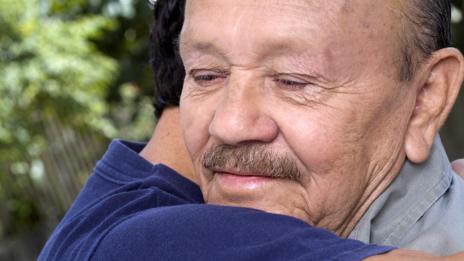
The call no one wants to get. (Credit: Thinkstock)
Three years ago, Lynette Whiteman’s 85-year-old mother fell in the middle of the night and broke her pelvis.
Emotions are high in any crisis, so people often aren’t thinking about being careful about how they communicate. — Amy Goyer
Unfortunately, she was the full-time caregiver for her husband, Whiteman's father, who had vascular dementia, so Whiteman had to spring into action. “I remember driving to the hospital... and thinking, ‘Everything is going to change now,’” said Whiteman, now 58, who lives in New Jersey in the US. “Not only did my mom suddenly need care and rehab, but we had to put people in place to help my dad.”
Dealing with a caregiving emergency can test even the most organised family. There’s a good chance you’ll experience it for yourself. One in three US workers face elder care responsibilities and almost half expect to face them in the next five years, one survey showed. In the UK, 52% of caregivers — or 3.38 million people — are caring for a parent or in-law. In Australia, 671,000 of primary caregivers are looking after parents.
While such a crisis is often health-related, there are other things that often require quick assistance. For instance, you might find your father is suffering from dementia and hasn’t been paying his bills. Or a weather emergency could cause a power outage that will shut off lights, heat and other equipment. “The first thing to do is assess the situation,” said Amy Goyer, AARP’s family, parenting and grandparenting expert, and author of Juggling Work and Caregiving. “What is the main crisis you need to focus on?”
Here’s how to proceed when an emergency hits.
What it will take: It’s a juggling act. Get ready to manage your parent’s healthcare needs and meet their day-to-day obligations, yet also maintain your own life. The more you can do ahead of time, the more seamless it will be. “It’s better if you’re not trying to find information and make decisions and look into the future when you’re in the middle of a crisis,” Goyer said. “Your emotions are going to be all over the place.”
How long you need to prepare: If your parents are in their 60s or 70s, you should be talking to them about what plans they have in place and what their wishes are in the event of a caregiving crisis, said Deborah Stone of MyAgeingParent.com, a UK website with resources for those caring for an elderly relative. So, ensure your parents have prepared their estate documents. In many cases that includes wills, financial and healthcare powers of attorney, and medical directives.

An emergency can test even the most organised family. (Credit: Thinkstock)
For hints on starting this challenging conversation, you might visit the Five Wishes page from AgingWithDignity.org. “Try to put it in terms of why it’s going to prolong their independence,” said Andy Cohen, co-founder and chief executive officer of US site Caring.com. “They need to do these things so their wishes will be honored.”
Do it now: Let everyone know what’s happening. “Get the siblings together on a phone call or Skype chat,” Cohen said. “Having a family meeting is the first step. Usually it falls to a daughter who is close by to be the alpha caregiver, but there’s usually someone who takes the lead and is organising and communicating to the other siblings what’s going on.”
If there’s another parent still in the picture who can handle the decision-making, adult children should take a supporting role. That could mean researching medical conditions and treatment, discussing options with your parent, offering opinions respectfully, and even bringing coffee, meals or a warm blanket when needed.
If there are disagreements about your other parent’s decisions, a hospital social worker or family mediator may help. “The emotions are high in any crisis, so people often aren’t thinking about being careful about how they communicate,” Goyer said. “People who have never had conflict before often find themselves in the thick of it now.”
Determine what needs managing. Does your parent have a mortgage payment due? Are there pets who require care? Who’s managing the house? “Make a checklist for yourself and make sure all those bases are being covered,” Goyer said. “Neighbours can be very helpful.” If one parent is caught up in dealing with their spouse’s healthcare issues, they may need help managing their day-to-day life.

When your aging parent needs you — now. (Credit: Thinkstock)
Talk to your parent. Ask if estate documents have been prepared. If so, ask that they include a healthcare power of attorney or medical directive — and where to find them. Those documents will enable you (or whomever your parent names) to make decisions regarding healthcare. You should also ask for a list of user names and passwords for online accounts and a list of bills that need paying on a regular basis. “A lot of people do online bill paying now,” Goyer said. “So it’s not like you can go home and check the mail and see if there’s something due.”
Check your employer’s policies. Depending on where you live, you may be able to take a leave of absence. In the US, for instance, the Family and Medical Leave Act allows for 12 weeks of leave in a 12-month period to deal with a parent with a serious health condition. In the UK, an employer may allow “compassionate leave” for an emergency situation. In Australia, you may be able to take Sick & Carer’s Leave.
Deal with your own life. Don’t forget that while you’re handling the details of your parent’s life, yours continues. Delegate as necessary and ensure your own obligations are being met.
Do it later: Get help. You may need services to help your parent
daily with household and caretaking tasks.
Or you may need to find a new place for them to live, such as an assisted living residence. Your parent may need a care assessment to qualify for services. That may mean contacting your parent’s GP or the local agency on aging. In the US, a geriatric care manager can be especially helpful in coordinating things, particularly if you don’t live close by.
Do it smarter: Remember that you’re an advocate. If you’re in the hospital with a parent, remember that you’re there to support them. If they're thirsty, make sure they get water. If they're cold, make sure they get a heated blanket. If they're getting medication, do your best to keep track of it. When Goyer’s mother was in the hospital, “they had put one of her medications on her list twice,” Goyer said. “And the nurse was literally going to give it to her twice.”
Determine who is in charge — the doctor assigned to your parent, the head nurse — and then connect with those people. “I think often, in hospitals, we feel kind of like we’re a passenger along for the ride,” Goyer said. “But you need to see yourself more as one of the navigators. You have every right to ask questions.”
Read more ...

Could anyone paint a Vermeer?

A new documentary centres on an inventor and his claims that Vermeer relied more on tricks and technology than artistic talent to create his famous works. Tom Brook reportsInventor Tim Jenison is the focus of the new documentary Tim’s Vermeer. His mission: to prove that a Vermeer masterpiece could be created by an amateur like himself.
In the film Tim Jenison uses technology to recreate the master’s painting The Music Lesson − it’s an experiment that could show that Vermeer relied on fancy tools rather than artistic genius.
The movie is a collaboration from magic act Penn (who narrates) and Teller (who directs). They raise interesting questions about Vermeer’s purported use of a camera obscura, lenses and mirrors – and what impact this has on our view of Vermeer’s artistic merit.(Sony Pictures Classics)
Read more ...