Monday, 15 June 2015

Sinabung eruption: Thousands flee Indonesia volcano

Thousands of people living close to a volcano in Indonesia have been forced to flee their homes after it began erupting violently.
Mount Sinabung, on the island of Sumatra, became active again in 2010 but there has been more activity since 2 June.
Before 2010, the volcano had been dormant for more than 400 years.
At least 3,000 people living near its slopes have had to leave, including 1,200 on Monday alone.
Scientists worry the volcano could pose more dangers in the coming weeks.
The danger alert for Mount Sinabung is now at its highest level
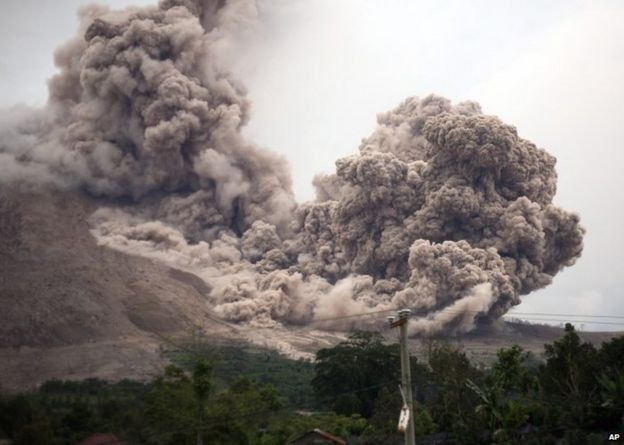
Pyroclastic flows - surges of hot ash and rock - speed down the side of Mount Sinabung
A close-up of volcanic ash flowing down from Mount Sinabung
Thousands more people are likely to have to flee in the coming days
Mount Sinabung releases pyroclastic flows as seen from Tiga Serangkai, North Sumatra, Indonesia, Saturday, June 13, 2015
On Monday, there were at least 28 pyroclastic flows - surges of hot ash and gas that rush down the side of the mountain at high speed.
Gede Suantika, an Indonesian government volcanologist, said there were signs a lava dome was growing on Mount Sinabung.
Lava domes are pile-ups of magma near the vent at the top of a volcano, that have been known to collapse and flow down mountain sides at high speed.

Why are Mount Sinabung's pyroclastic flows so deadly?

The danger alert for Mount Sinabung was raised to its highest level on 2 June. Thousands more people are likely to have to evacuate the area in the coming days, a military commander in Sumatra told AFP.
At least 14 people died when pyroclastic flows from Mount Sinabung struck villages in February last year.
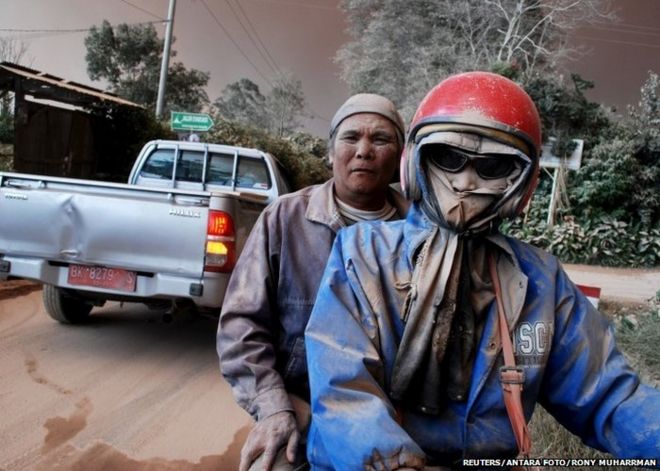

Residents with faces covered in ash ride on a motorcycle as Mount Sinabung volcano erupts, in Sukandebi village in Karo Regency, Indonesia's North Sumatra province, June 13, 2015

No comments :

Post a Comment